+420 770 134 567
  info@esthesion.cz
  Jugoslávských partyzánů 15, Prague 6
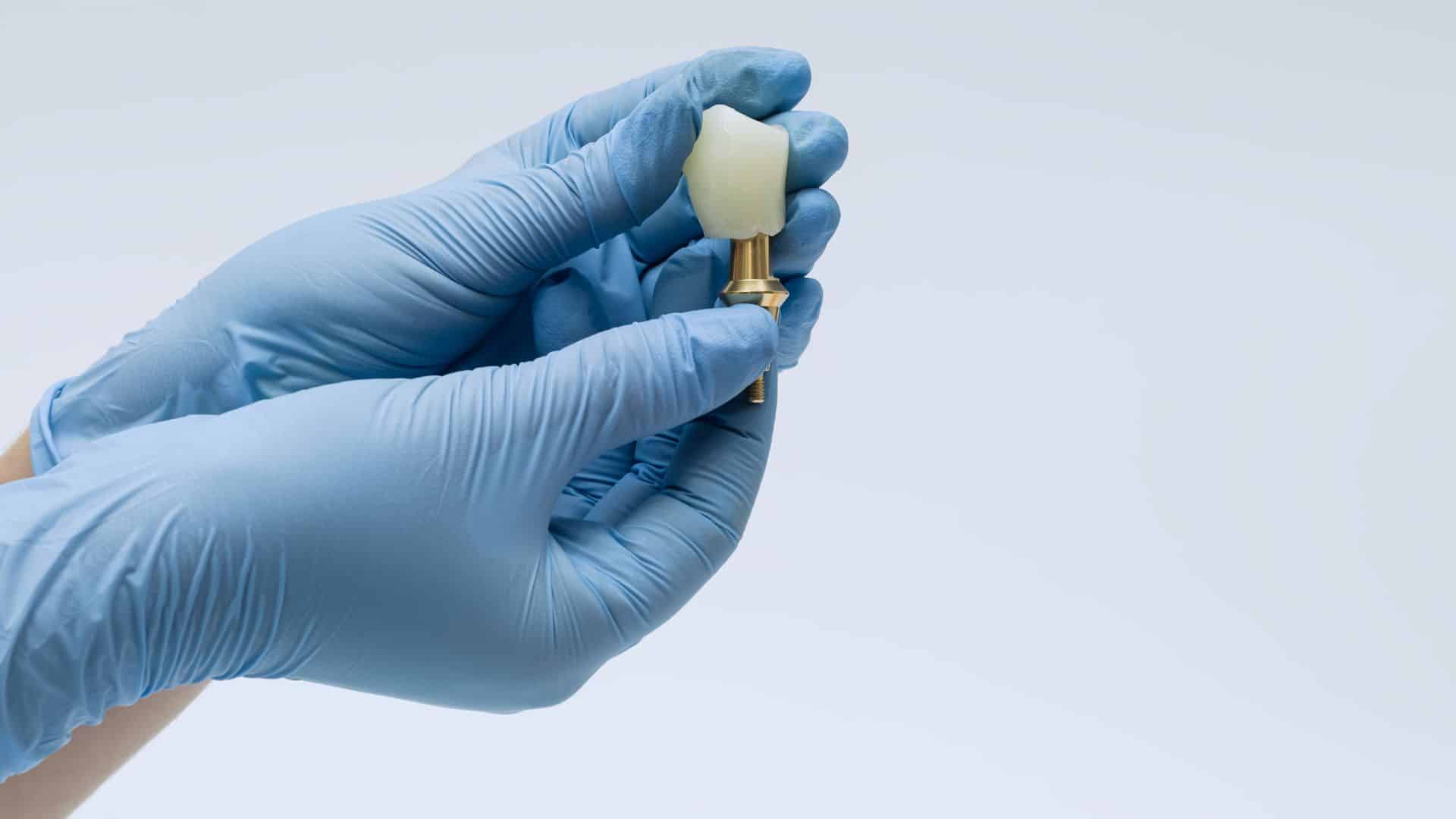
Is the gum around your implant bleeding? Is it red or slightly swollen? Have you noticed a purulent discharge or a strange taste in your mouth? You may have attributed it to your toothbrush or temporary sensitivity. But what if it is the first sign of inflammation that could irreversibly damage your implant?
Peri-implantitis is an inflammatory disease of the tissues surrounding a dental implant. It affects approximately one in five implants — and yet remains one of the most underestimated complications in implantology. Its insidious nature lies in the fact that it initially presents as a minor nuisance: slight bleeding, redder gums. Without treatment, however, it leads to progressive bone loss around the implant — and if the inflammation goes deep enough, the implant is lost.
The good news is that peri-implantitis is treatable when caught early. In this article, we explain how to recognise it, what the treatment involves, and — most importantly — how to prevent it altogether.
What is peri-implantitis and how does it differ from mucositis?
Before we discuss the symptoms, it is important to distinguish between the two sequential stages of the disease. This distinction is not academic — it has a direct impact on how complex and costly the treatment will be.
Mucositis is inflammation of the soft tissues only — the gums — around the implant. The bone still firmly supports the implant. Mucositis is fully reversible: with proper treatment and hygiene, the gums return to normal without lasting consequences.
Peri-implantitis is a progressive inflammation that spreads from the gums into the bone. The bone begins to resorb — it gradually diminishes and the implant loses its support. The bone damage is permanent. The condition is not irreversible in the sense that the implant necessarily has to be removed, but it requires more complex treatment and the bone loss does not regenerate on its own.
| Mucositis | Peri-implantitis | |
| Affected tissues | Gums only | Gums + bone |
| Bone loss | None | Progressive |
| Reversibility | Fully reversible | Partially/difficult to reverse |
| Treatment | Non-surgical | Non-surgical or surgical |
Mucositis is a warning sign. If you detect and treat it, peri-implantitis can be prevented in most cases.
How does peri-implantitis develop? Bacterial biofilm — a layer of bacteria — accumulates around the neck of the implant. If it is not regularly removed, it causes chronic inflammation. The gums first react with swelling and bleeding (mucositis), and the inflammation gradually spreads into the bone. A systematic review of 57 studies published in BMC Oral Health (2022) found that peri-implantitis affects approximately 20% of patients with implants — making it a significant epidemiological problem, not a rare complication.
Symptoms of peri-implantitis — How to recognise the inflammation
Peri-implantitis can progress for many months with almost no pain. This is precisely what makes it dangerous. Relying on pain as a warning signal is not enough — bone loss occurs silently.
Warning signs listed from earliest to latest:
1. Bleeding during brushing or probing — the most common and most important early sign
2. Redness and swelling of the gum around the implant
3. Sensitivity or pain when touching or chewing
4. Unpleasant breath odour or metallic taste
5. Pus discharge from the area around the implant
6. Receding gums — the implant visually appears longer
7. A feeling that the implant is loose — a late, serious stage
Bleeding during brushing is a signal you must never ignore. A healthy implant does not bleed at the gum line. Any repeated bleeding around an implant is a reason to see your dentist — ideally within two weeks.
When to see a dentist immediately:
- Purulent discharge around the implant
- A feeling that the implant is moving or does not “sit” the way it used to
- Pain or pressure in the implant area that does not subside
Who is most at risk — Risk factors
Peri-implantitis can develop in any patient with an implant. However, there are factors that significantly increase the risk.
Poor oral hygiene is the primary factor — accumulation of bacterial biofilm is the direct cause of inflammation. Without regular and thorough cleaning, even the most sophisticated implant is at risk.
Smoking is the second highest risk factor. A meta-analysis published in the Journal of Oral and Maxillofacial Research (2016) found that smokers have more than triple the risk of implant loss compared to non-smokers. Nicotine restricts blood supply to the gums and disrupts the immune response, suppressing the natural defence of the tissues.
History of periodontitis (gum disease affecting natural teeth) is another strong risk factor. The same predisposition to inflammation that caused periodontitis also threatens implants. Patients with a history of periodontitis require more intensive follow-up care.
Uncontrolled diabetes impairs tissue healing and immune response — the risk of peri-implantitis is significantly higher in patients with poorly managed diabetes.
Skipping regular check-ups is a factor entirely within your control — and yet it is often underestimated. The inflammation develops unnoticed; regular probing and X-ray monitoring are the only reliable tools for early detection.
Other less common factors include immunosuppressive therapy, residual dental cement beneath the gum line, or insufficient width of keratinised gingiva around the implant.
Treatment of peri-implantitis — From hygiene to surgery
The treatment approach depends on the stage of the disease. The sooner you begin treatment, the less invasive it will be.
Treatment of mucositis
Mucositis is treated without surgical intervention. The foundation is professional implant cleaning, removal of plaque and tartar around the neck of the implant, and thorough instructions for home hygiene. A chlorhexidine rinse or gel may be used as a supplement. With diligent patient cooperation, the gums typically heal within 4 to 6 weeks.
Non-surgical treatment of peri-implantitis
In less advanced cases with mild bone loss, a non-surgical approach is attempted first: deep cleaning beneath the gum line, decontamination of the implant surface, and local application of antibiotics. Results vary — they depend on the depth of the periodontal pocket and the extent of the damage.
Surgical treatment
If non-surgical treatment is insufficient or the peri-implantitis is advanced, a surgical solution is pursued. This includes open debridement and decontamination of the implant surface (cleaning is both mechanical and chemical — we use the advanced GalvoSurge device), removal of inflamed tissue, and, where necessary, bone augmentation — replenishing the missing bone with biological materials.
For patients who are anxious about surgical procedures: at our clinic we offer analgesic sedation, which allows you to undergo even more complex procedures in a relaxed, almost drowsy state. Nothing hurts, nothing needs to be endured.
According to the S3 guideline of the European Federation of Periodontology (EFP) from 2023, the success of peri-implantitis treatment depends on a combination of early diagnosis, selection of the appropriate treatment method, and — critically — the patient’s long-term commitment to home hygiene and regular maintenance appointments.
When must the implant be removed?
There are situations in which the implant can no longer be saved: advanced bone loss (typically more than 50% of the implant length), a loose implant, or repeated failure of conservative treatment. Even in such cases, all is not lost — after the tissues have healed, a new implant can be considered.
Prevention — How to avoid peri-implantitis
Prevention is considerably simpler — and cheaper — than treatment. Proper hygiene and regular check-ups save the majority of implants.
Home care
- Clean the implant twice a day — with a soft-bristle toothbrush with rounded tips
- Use an interdental brush every day — the interdental space around the implant is the highest-risk area
- Single-tuft brush for cleaning at the gum line, especially where the interdental brush cannot reach
- Oral irrigator (water flosser) — effectively removes biofilm in areas that a toothbrush cannot reach; comparative studies show that an irrigator reduces bleeding around implants three times more effectively than traditional dental floss
Regular professional check-ups
- Every 6 months in the first year after implant placement — this period is critical for the development of mucositis
- Once a year in subsequent years (every 3 months for high-risk patients)
- An annual X-ray allows bone loss to be detected before it becomes clinically apparent
One of the key advantages of care at Esthesion: the entire implantology process — from implant placement to long-term monitoring — is managed by one doctor at one location. They know your implant from day one, notice any deviation from the norm, and never lose context. Peri-implantitis is best treated where the implant was placed.
Eliminating risk factors
- Quit smoking — or at least significantly reduce it — this substantially lowers the risk even for existing implants
- Manage diabetes under professional supervision
- Do not skip check-ups even when nothing hurts
Frequently Asked Questions (FAQ)
Can peri-implantitis be cured?
Yes — especially when caught early. Mucositis is fully reversible. Peri-implantitis is treatable but requires more intensive therapy. Bone that has been resorbed does not regenerate on its own, but surgical augmentation can at least partially repair the defect. The prognosis depends on the extent of the damage and the patient’s cooperation.
Is peri-implantitis treatment painful?
Non-surgical treatment is painless or causes minimal discomfort. Surgical treatment is performed under local anaesthesia — you feel nothing during the procedure. Analgesic sedation is available at our clinic for patients who prefer a calm, anxiety-free state. After the procedure, there may be mild soreness that is easily managed with standard painkillers.
How long does the treatment take?
Treatment of mucositis typically takes a few weeks. Peri-implantitis may require treatment over 3 to 6 months with repeated visits. The key is ongoing maintenance care — regular check-ups are a lifelong commitment.
Can peri-implantitis return after successful treatment?
Yes, if you return to poor habits. After successful treatment, strict hygiene and more frequent check-ups — typically every 3 to 4 months — are essential. Recurrence is a particular threat for smokers and patients with poor hygiene.
How can I tell whether I have mucositis or peri-implantitis?
Based on a clinical examination and X-ray — this cannot be reliably determined at home. The dentist will perform probing (measuring the pocket depth around the implant) and assess the X-ray. If you are bleeding during brushing, visit the clinic — do not assume either diagnosis on your own.
Conclusion
Peri-implantitis is a serious but treatable disease — under one condition: you must catch it early. Bleeding of the gum around an implant is not normal. Redness or sensitivity that does not go away is a signal to act.
Come for a check-up before it is too late. At the Esthesion clinic in Prague, your implant is cared for by one doctor from placement to lifelong maintenance — they know your case in detail and catch every deviation from the norm. Book your implant check-up today.
References
- Herrera D, Berglundh T, Schwarz F, et al. Prevention and treatment of peri-implant diseases — The EFP S3 level clinical practice guideline. Journal of Clinical Periodontology. 2023;50(Suppl. 26):4–76. (https://pubmed.ncbi.nlm.nih.gov/37271498/)
- Diaz P, Gonzalo E, Gil Villagra LJ, Miegimolle B, Suarez MJ. What is the prevalence of peri-implantitis? A systematic review and meta-analysis. BMC Oral Health. 2022. (https://pubmed.ncbi.nlm.nih.gov/36261829/)
- Stacchi C, Berton F, Perinetti G, et al. Risk Factors for Peri-Implantitis: Effect of History of Periodontal Disease and Smoking Habits. Journal of Oral and Maxillofacial Research. 2016. (https://pubmed.ncbi.nlm.nih.gov/27833728/)
- Peri-implantitis Update: Risk Indicators, Diagnosis, and Treatment. Current Oral Health Reports. 2020. (https://pmc.ncbi.nlm.nih.gov/articles/PMC7536094/)
- Risk factors for peri-implantitis: An umbrella review of meta-analyses. Journal of Dentistry. 2024. (https://www.sciencedirect.com/science/article/abs/pii/S0300571224002343)