+420 770 134 567
  info@esthesion.cz
  Jugoslávských partyzánů 15, Prague 6
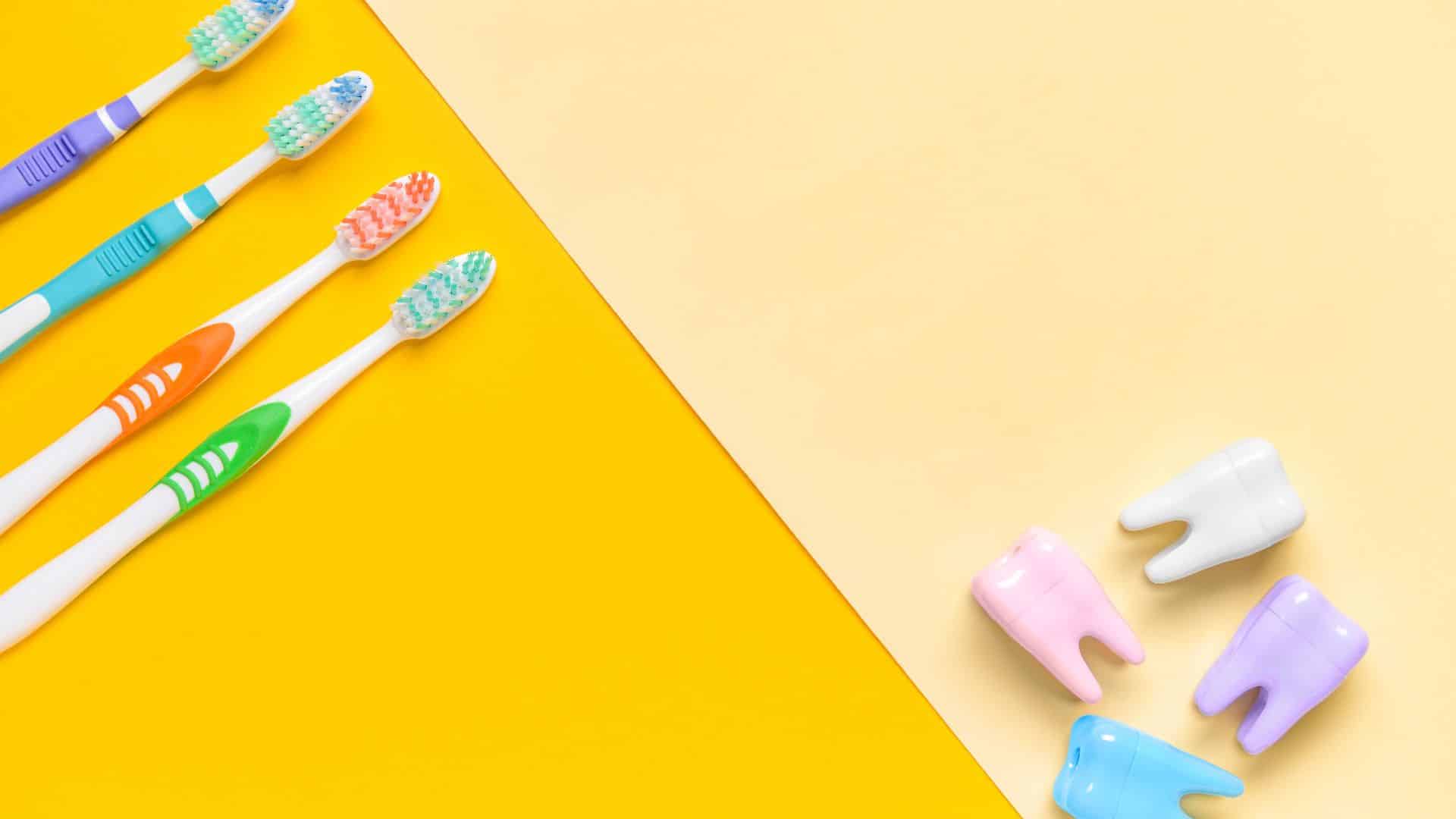
A dental implant is an investment in the range of tens of thousands of Czech crowns. Whether it lasts 10 or 25 years does not primarily depend on the material or who placed the implant — it depends on how you care for it every day. Proper care of dental implants differs from the care of natural teeth, and it is precisely in this difference that the key to long-term success lies. In this guide, you will find specific instructions, figures, and procedures — without unnecessary generalities.
Why implant care differs from natural tooth care
A natural tooth is anchored in the jaw through the periodontal ligament — a resilient tissue that cushions mechanical load, regulates microbial pressure, and has the ability to biologically regenerate. An implant works differently: the titanium screw is directly fused with the bone (osseointegration) without any intermediary tissue. It is a stronger and more stable connection, but the tissues around the implant have substantially less inherent defence. Simply put — a tooth is tissue that belongs to the body. An implant is a material that the body tolerates.
The mucosa surrounding the implant has less blood supply than the gum around a natural tooth. Bacteria find easier conditions for colonisation. The result can be peri-implantitis — inflammation of the tissues around the implant that progressively destroys bone until the implant loosens. Without active prevention, peri-implantitis develops in 20–22% of implants.
At the same time, there is positive news: with proper daily care and regular professional check-ups, the risk of peri-implantitis is minimal. A meta-analysis of 18 studies published in the Journal of Dentistry (Howe et al., 2019) demonstrated a 10-year implant survival rate of 96.4%. And that is just the beginning — it is up to you how long your implants will last.
Daily implant hygiene: step by step
A daily implant care routine takes no more than 5–7 minutes. The key, however, is consistency — mechanical cleaning cannot be replaced by mouthwash or a water flosser alone.
1. Toothbrush
Choose a toothbrush with bristles labelled “soft” or “ultra-soft”. Medium and hard bristles unnecessarily irritate the gum around the implant.
Technique: circular movements at a 45-degree angle to the gum line, covering the area around the implant neck beneath the gum margin. Twice a day — morning and evening — is the minimum. Ideally, brush after the main meal as well.
An electric toothbrush is a fully adequate alternative. Prefer the sonic type (vibration, not rotation). Do not set it to maximum pressure.
2. Interdental brush
The interdental brush is the most important tool for implant care — more important than for natural teeth, because the shape of the gap around an implant differs from that around a natural tooth.
For implants, choose a diameter of 0.9–1.1 mm with a conical or cylindrical shape. The wire must be coated with plastic or silicone — a bare metal wire damages the titanium surface of the implant.
Technique: a gentle in-and-out motion without pressure, through the interdental space, once a day in the evening. If the brush does not pass through, do not force it — choose a smaller diameter or consult your dentist about the correct size.
3. Superfloss or dental floss for implants
Regular dental floss works, but Superfloss or a specialised implant floss is more convenient — it has a stiffened end for threading under the crown and a spongy middle section for cleaning around the implant.
Technique: thread it under the crown, wrap it around the entire circumference of the implant (in a C shape), and move gently up and down. Once a day, in the evening.
4. Oral irrigator (Water Flosser)
An oral irrigator is a valuable supplement — but not a replacement for mechanical cleaning. The water jet can flush out food debris from places a brush cannot reach, especially under hybrid dentures and around bridges.
Set it to medium pressure — the sensitive tissue around the implant can become more easily irritated at maximum pressure. A systematic review published in BDJ Open (Gandhi et al., 2025) showed that an oral irrigator combined with a toothbrush reduces bleeding around implants significantly more effectively than dental floss (81.8% vs. 33.4% reduction in inflammation).
5. Mouthwash
Use mouthwash at the end of your hygiene routine, not as a substitute for mechanical cleaning. Important: choose alcohol-free products — alcohol dries out the mucosa and increases local irritation.
Chlorhexidine mouthwashes are effective antibacterial agents but should be used only as a short-term solution (after a procedure or for incipient inflammation). Long-term daily use causes tooth staining and disrupts the natural oral microflora.
What you should never do
| Not recommended | Why | What to do instead |
| Smoking | Increases the risk of failure, though not a contraindication | Quit smoking or reduce it |
| Abrasive whitening toothpastes | Damage the titanium surface of the implant | Use a gentle fluoride toothpaste without whitening abrasives |
| Chewing hard objects (ice, hard candy, bones) | Mechanical damage to the crown or implant | Avoid these habits |
| Opening packages with teeth | Extreme lateral forces on the implant | Use scissors |
| Skipping preventive check-ups | Inflammation develops silently, without pain | Follow the recall programme — see below |
Smoking: the biggest saboteur of your implant
Smoking deserves special attention because the level of risk it introduces is exceptional. Nicotine and combustion byproducts reduce blood supply to the tissues around the implant, impair healing, and weaken the local immune response.
A systematic review of 32 studies involving 59,246 implants, published in the Journal of Dentistry (Fan et al., 2024), demonstrated that smokers have a 2.6 times higher probability of early implant failure compared to non-smokers. For implants placed in the upper jaw, the risk is even more pronounced — smokers exhibit up to a 5.9 times higher failure rate.
If you smoke and are planning implants, or if you smoke and already have implants, quitting smoking is one of the most effective measures you can take for their longevity. It is a decision that pays off.
Regular dental check-ups: what is examined and how often
Home hygiene is the foundation, but without regular professional check-ups it is not enough. Tartar around the implant cannot be removed at home — and inflammation develops imperceptibly, without pain, until the damage is significant.
Recommended schedule:
- 1st year after implant placement: every 6 months — a critical period for osseointegration and healing
- From the 2nd year onwards: at least once a year
What the dentist evaluates during a check-up:
1. X-ray — monitors bone height around the implant; a decrease of 2 mm or more is a warning sign
2. Probing — measuring pocket depth around the implant; a healthy value is up to 3–4 mm
3. Visual assessment — redness, bleeding, swelling of the gum around the crown
4. Occlusal loading — checking bite symmetry, even distribution of forces on the implant
At the Esthesion clinic, an implant patient has a distinct advantage: one doctor who knows the entire history of your teeth — from the first consultation through implant placement — also performs all regular check-ups. Nothing is overlooked, nothing slips between specialists. For patients with anxiety about dental visits, analgesic sedation is available — even during a preventive check-up.
Warning signs of peri-implantitis: when to call immediately
Peri-implantitis develops silently — the first symptoms are subtle and painless. The sooner you catch it, the easier and less invasive the treatment will be.
Contact your dentist immediately if you notice:
- Bleeding during brushing lasting more than 2–3 days
- Redness or swollen gum around the implant crown
- Pain or sensitivity beneath the implant or in its vicinity
- Mobility of the crown or a feeling that “something is off”
- Smell or taste of pus around the implant
- Receding gum — exposed crown margin or part of the titanium screw
How long will an implant last: realistic numbers
With proper care, an implant lasts 20 years or more. There are documented cases of implants functioning for over 30 years. The titanium screw fused with the bone is extremely durable — it is the crowns that tend to wear out and may need replacement after 10–15 years. It should be noted that this data is from implants placed 30 years ago. The materials used today are of much higher quality, and it can be expected that they will last even longer.
According to a meta-analysis from 2024 published in Clinical Oral Investigations (Kupka et al., 2024), approximately 4 out of 5 implants survive 20 years of follow-up — but only with ongoing professional care and monitoring. Without proper care, this number drops significantly.
Factors that shorten lifespan:
- Smoking (2.6–5.9 times higher risk of failure)
- Uncontrolled diabetes mellitus (slowed healing, higher susceptibility to infection)
- Untreated osteoporosis (compromised bone quality)
- Bruxism without a protective splint (excessive and unbalanced loading)
Factors that extend lifespan:
- Consistent daily hygiene (toothbrush + interdental brush + floss)
- Regular professional check-ups and cleaning
- Not smoking — or quitting smoking
- A protective splint for bruxism
- Regular X-rays to monitor bone levels
All-on-4 hybrid denture
A hybrid denture supported by 4 implants combines the advantages of a fixed restoration with cost effectiveness. However, care is specific — particularly cleaning under the arch of the denture.
How to do it:
- Use an interdental brush with a long enough or flexible handle to reach under the arch
- Superfloss or special floss — thread it under the arch and clean along the entire length
- An oral irrigator (water flosser) is a priority tool for daily rinsing under the denture
- Regular professional check-ups for fixation and condition of the mucosa under the restoration
Frequently Asked Questions
Can I use an electric toothbrush on my implant?
Yes — the sonic type without maximum pressure is a fully adequate alternative to a manual toothbrush. Oscillating toothbrushes also work, but be careful with the pressure setting.
How long after implant placement do I have to wait before eating normal food?
Immediately after the procedure: soft food, avoid hot liquids. After osseointegration is complete (usually 3–6 months): no restrictions. The implant can withstand the same load as a natural tooth.
Does implant care hurt?
No, if everything is in order. Pain or sensitivity during cleaning are warning signs — not a normal condition — and are a reason for a check-up.
Do I need a special toothpaste?
Not necessarily. A fluoride toothpaste with a gentle texture is sufficient. Avoid pastes with whitening abrasives (with peroxide or silica abrasives) that damage the titanium surface.
When do I need my first check-up after implant placement?
Usually 7–10 days after the procedure (healing check-up), and then as recommended — every 6 months in the first year, and at least once a year from the second year onwards. Your doctor will set the exact schedule for you.
Conclusion
A dental implant is a technologically advanced and long-term reliable tooth replacement. Whether it lasts 10 or 25 years depends on three pillars: consistent daily hygiene, regular professional check-ups, and not smoking.
Implant care is not more complicated than natural tooth care — just different. Choosing the right tools (soft toothbrush, plastic-coated interdental brush, Superfloss) and consistency in your daily routine are an investment that pays off in decades of trouble-free function.
Planning an implant, or want to check the condition of your existing ones? At the Esthesion clinic in Prague, you will be examined by one doctor who knows the entire history of your teeth. Book a consultation — and find out exactly how to care for your specific case.
References
- Howe MS, Keys W, Richards D. Long-term (10-year) dental implant survival: A systematic review and sensitivity meta-analysis. Journal of Dentistry. 2019;84:9–21. DOI: 10.1016/j.jdent.2019.03.008
- Kupka JR, König J, Al-Nawas B, Sagheb K, Schiegnitz E. How far can we go? A 20-year meta-analysis of dental implant survival rates. Clinical Oral Investigations. 2024. DOI: 10.1007/s00784-024-05929-3
- Herrera D, Berglundh T, Schwarz F, et al. Prevention and treatment of peri-implant diseases — The EFP S3 level clinical practice guideline. Journal of Clinical Periodontology. 2023;50(Suppl 26):4–76. DOI: 10.1111/jcpe.13823
- Fan YY, Li S, Cai YJ, Wei T, Ye P. Smoking in relation to early dental implant failure: A systematic review and meta-analysis. Journal of Dentistry. 2024;151:105396. DOI: 10.1016/j.jdent.2024.105396
- Naseri R, Yaghini J, Feizi A. Levels of smoking and dental implants failure: A systematic review and meta-analysis. Journal of Clinical Periodontology. 2020. DOI: 10.1111/jcpe.13257
- Gandhi G, Masanam BSL, Nair AS, Semani N, Chopra A, Ramanarayanan V. Efficacy of oral irrigators compared to other interdental aids for managing peri-implant diseases: a systematic review. BDJ Open. 2025. DOI: 10.1038/s41405-025-00301-3